CONTACT US
If you have any queries, get in touch today! Don't hesitate. We try to take the extra step for our customer satisfaction.


 English
-
 English
 -
中文

What are the two types of quantitative methods for vertical powder packaging machines?
2025-05-15 11:23:39
Click:
“
Vertical powder packaging machines typically use two main types of quantitative
”
Vertical powder packaging machines typically use two main types of quantitative (dosing) methods, which are distinguished by their measurement principles and application scenarios. Here’s a detailed breakdown:
### **1. Volumetric Quantitative Method**
**Principle**: Measures the **volume** of powder using mechanical components (e.g., cups, augers, or screws) to dispense a fixed or adjustable volume.
- **Key Types and Components**:
- **Cup Filling**:
- Uses cylindrical cups of varying sizes to scoop and transfer powder. The volume is adjusted by changing the cup height or using interchangeable cups.
- *Example*: Packaging instant coffee, milk powder, or granular seasonings with consistent bulk density.
- **Auger (Screw) Filling**:
- A rotating screw (auger) transports powder through a tube, with the volume controlled by the screw’s speed, pitch, and rotation time.
- *Example*: Packaging talcum powder, flour, or chemical powders that flow freely.
- **Pneumatic Filling**:
- Uses air pressure to convey powder through a pipeline, with volume regulated by flow rate and time.
- *Example*: Lightweight powders like pharmaceutical granules or coffee creamer.
- **Advantages**:
- Simple structure, low cost, and suitable for high-speed production.
- Works well for powders with stable **bulk density** (e.g., uniform particle size and flowability).
- **Limitations**:
- Less precise for powders with inconsistent density (e.g., prone to compaction or air entrainment).
- Accuracy may fluctuate with changes in powder moisture or temperature.

### **2. Gravimetric Quantitative Method**
**Principle**: Measures the **weight** of powder using load cells or scales to achieve high-precision dosing.
- **Key Types and Components**:
- **Net Weight Filling**:
- Directly weighs the powder as it is dispensed into the packaging bag. The machine stops filling when the target weight is reached.
- *Example*: High-value powders like infant formula, nutritional supplements, or pharmaceutical powders requiring strict weight control (e.g., ±0.1 g).
- **Gross Weight Filling**:
- Weighs the entire package (including the container/bag) and subtracts the tare weight (container weight) to determine the net powder weight.
- *Example*: Packaging large bags of industrial powders (e.g., chemicals, fertilizers) where speed and rough accuracy are prioritized.
- **Advantages**:
- High accuracy, ideal for products with strict weight regulations or variable bulk density.
- Adaptable to powders that are prone to settling, bridging, or moisture changes.
- **Limitations**:
- More complex and expensive due to integrated weighing systems.
- Slightly slower than volumetric methods due to the weighing process.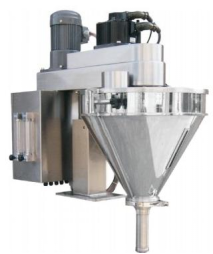 ### **Selection Guidelines**
- **Choose Volumetric** if:
- The powder has consistent flowability and density.
- High speed and low cost are prioritized over extreme precision.
- **Choose Gravimetric** if:
- The powder is valuable, hygroscopic, or has inconsistent density.
- Strict weight compliance (e.g., legal metrology standards) is required.
Some advanced vertical packaging machines may even combine both methods (e.g., using volumetric dosing for speed and gravimetric feedback for real-time accuracy adjustment), offering a balance of efficiency and precision.
### **Selection Guidelines**
- **Choose Volumetric** if:
- The powder has consistent flowability and density.
- High speed and low cost are prioritized over extreme precision.
- **Choose Gravimetric** if:
- The powder is valuable, hygroscopic, or has inconsistent density.
- Strict weight compliance (e.g., legal metrology standards) is required.
Some advanced vertical packaging machines may even combine both methods (e.g., using volumetric dosing for speed and gravimetric feedback for real-time accuracy adjustment), offering a balance of efficiency and precision.








ATTN: Vanessa Lee
TEL/WHATSAPP: +86 187 1924 3237
E-mail: annabelle3237@gmail.com
Vanessa01@fsdawn.com
ADD: No. 1, Sanheng Road, East area, Shilong North Road, Guicheng Street, Nanhai District, Foshan City, Guangdong Province,China
Website:www.fsdawn.com
Product
Quick Navigation
Get Newsletter

点击右上角
分享给朋友吧
©Copyright Foshan Dawn Intelligent Equipment Co., Ltd. reserved Technical support: fsdns.net
